States of matter is not always the most exciting topic for students, mainly because they revisit it so many times throughout their education. By the time they reach upper elementary or middle school, I often hear, “Oh no, not states of matter again! We’ve already learned this. We know it!”
Although students are familiar with solids, liquids, and gases, there is often more to understand than they initially think. That is why I like to find different ways to make this familiar topic feel fresh, engaging, and enjoyable. One of my favorite ways to do this is by turning learning and revision into a science board game.
Why I Like Using Board Games in Science Lessons
When I first started teaching, I mostly used worksheets and more traditional revision methods for topics like states of matter. But over time, even I started to find them repetitive. I could see from my students’ faces that they were not particularly excited about another lesson spent writing and answering questions.
I started experimenting with different approaches, including the popular activity where students act as particles and move around the classroom to demonstrate solids, liquids, and gases. This can work really well, especially with younger students, but I wanted to find something that would keep older students engaged too.
Although I still believe written revision is important, I like to introduce board games before a test to make revision more enjoyable. Students are naturally competitive, and they enjoy working in teams, discussing ideas, solving problems, and helping each other.
I find board games especially useful when I notice that the energy in the classroom is dropping. Instead of pushing through another worksheet, a game can bring back their attention, encourage cooperation, and make students excited to participate again.
How I Use My States of Matter Board Game in the Classroom
Over the past year, I have tested my States of Matter Board Game with different age groups, since I teach both upper elementary and middle school students. What I really like about this activity is how flexible it is and how easily it can be adapted to different ages and learning goals.
With younger students, I mainly use the game for revision before a test to help them review the key concepts. Students work in pairs, discuss the questions, and help each other find the correct answers. They enjoyed the activity so much that we played it again after the test and even at the end of the school year as part of our revision for final assessments.
With older students, I tried a slightly different approach. Since they already have some basic knowledge of states of matter, I introduced the game at the beginning of the unit to check what they remembered from previous years. I also turned it into a friendly competition, where the winning pair earned reward points as part of my classroom reward system. This added a little extra motivation and made the activity even more exciting.
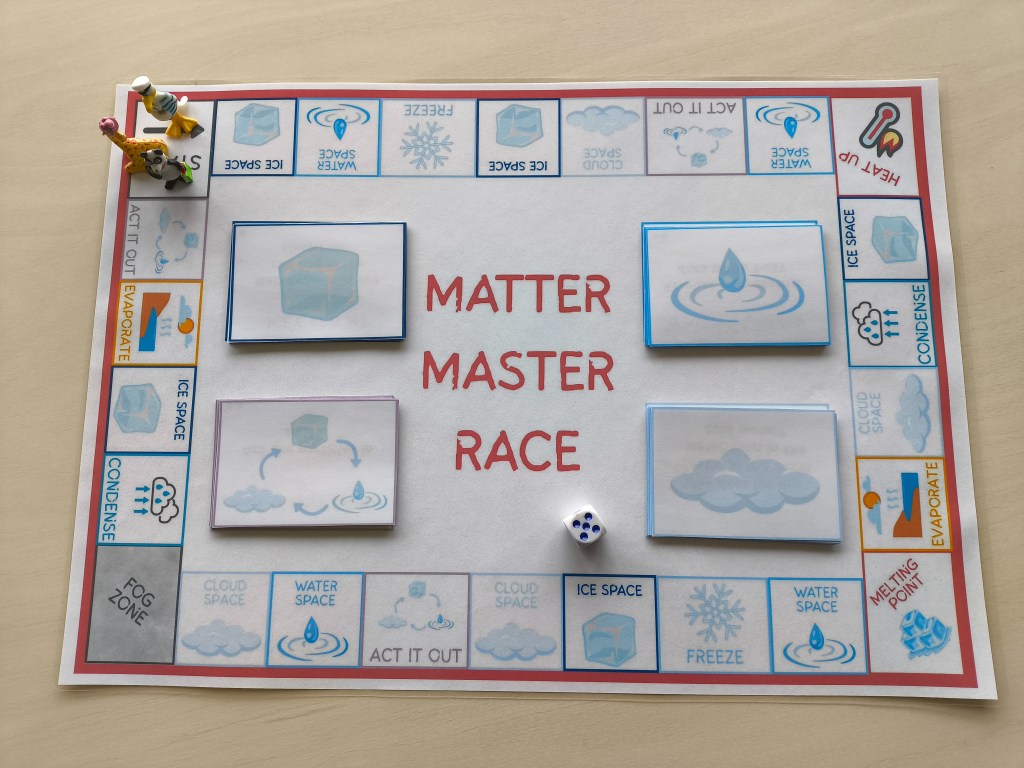
What I enjoy most is that the same board game can serve different purposes: checking prior knowledge, reviewing before a test, or making end-of-year revision more engaging.
A Ready-to-Use States of Matter Board Game
After seeing how much my students enjoyed this type of revision, I decided to turn the activity into a resource that I could use again and again with different age groups. My States of Matter Board Game: Matter Master Race gives students an opportunity to review important concepts in a fun and interactive way while working together, discussing ideas, and challenging themselves. It has become a useful addition to my science lessons, whether I use it to check prior knowledge or revise before a test.
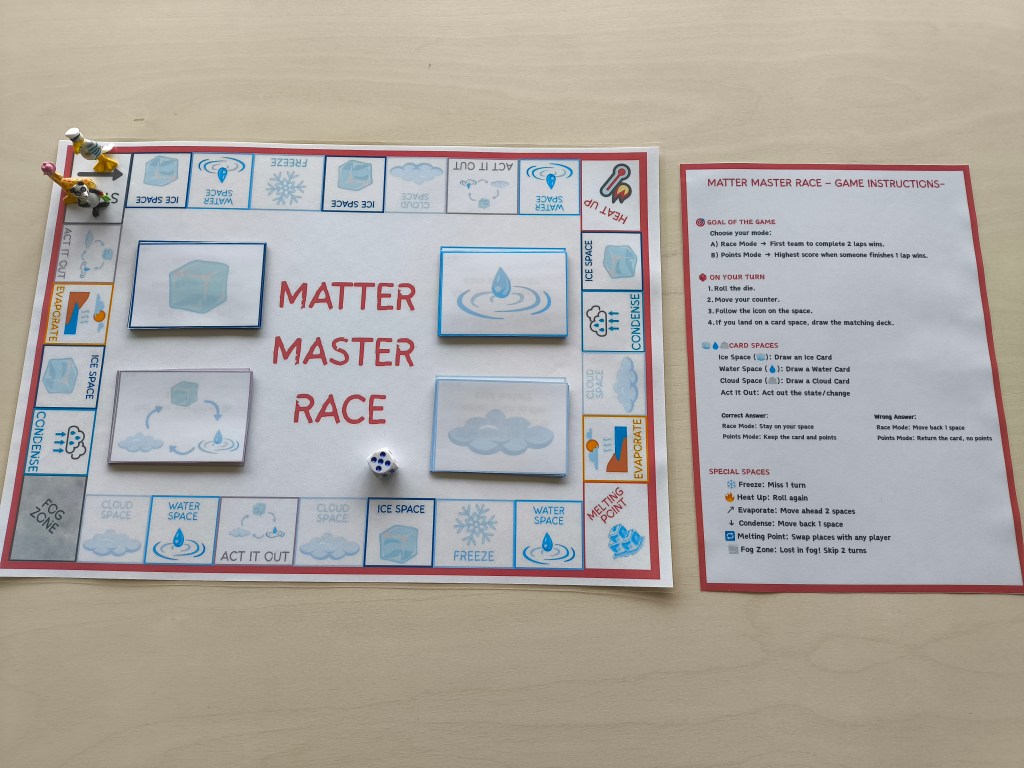
If you would like to try something similar in your classroom, you are welcome to check out the game.
Sometimes, even the most familiar science topics need a fresh approach to keep students interested. I have found that introducing games into my lessons is a simple way to bring back enthusiasm, encourage teamwork, and make revision feel less repetitive.
What I love most about board games is seeing students actively discussing questions, helping each other, and enjoying the learning process. It reminds me that learning doesn’t always have to involve worksheets and writing to be meaningful.
Do you use board games in your science classroom? I’d love to hear how you make familiar topics like states of matter more engaging for your students!
Happy teaching!
Tiana


Leave a Reply