The end of the school year can be challenging for both students and teachers. Students are often tired, less focused, and under pressure because they are preparing for exams in many different subjects. At the same time, teachers are doing their best to keep students motivated and help them feel as prepared as possible for their final assessments.
That is why I like to use simple, low-prep activities that help students stay engaged while reviewing important science concepts. Sorting cards, matching activities, and visual resources are some of my favorite ways to make revision more active, effective, and enjoyable.
Why I Like Using Low-Prep Revision Activities
At this time of year, teachers need activities that are easy to prepare, flexible, and simple to use in different ways. Revision can be difficult for many students because they tend to lose focus more easily, there is a lot of important information to review, and it is not always easy for them to keep up with everything without feeling overwhelmed.
Although I still use standard revision methods such as questions, worksheets, and textbooks, I think it is very important to make revision more visual and engaging as well. Including activities that students can do in pairs or groups, or even as a competition, helps break the routine and quickly brings back their focus.
This kind of revision also gives students a chance to be more active in the lesson instead of only listening, reading, or writing. At the end of the school year, that can make a big difference in keeping students motivated and involved.
Sorting Activities for Active Revision
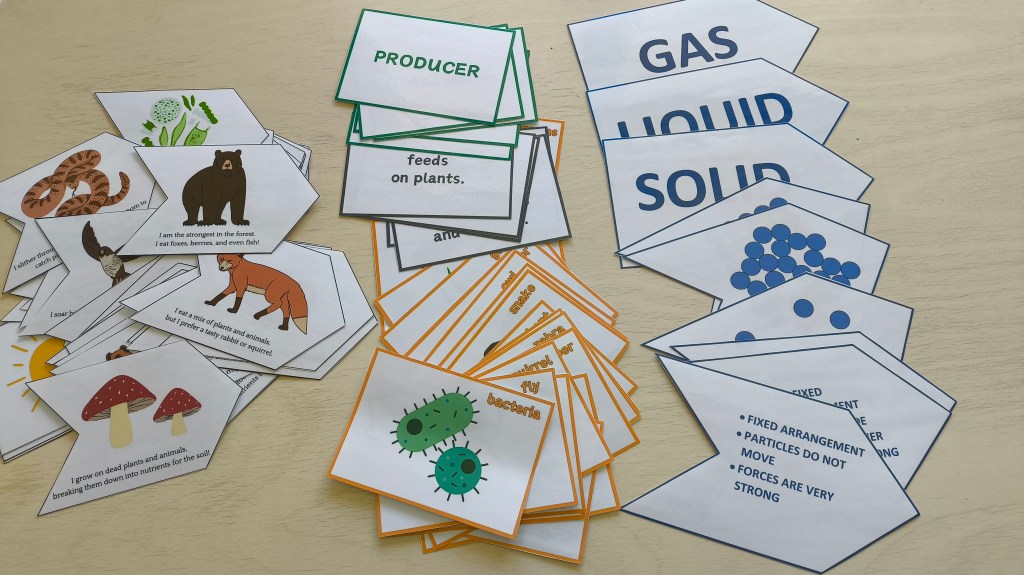
One of my favorite types of revision activities is definitely sorting activities. I use them with both upper elementary and middle school students, and students usually enjoy them a lot as well. Sorting cards are very flexible and can be used in many different ways: at the beginning of a unit to check what students already know, at the end of a unit to assess their progress, and during revision time to break away from more traditional methods and re-engage students through group work.
These activities are usually done in small groups, which makes them especially helpful for quieter students or those who feel unsure about their knowledge. Working with others gives them support and makes participation feel less stressful. Instead of worrying about making mistakes on their own, they can think together, discuss ideas, and build confidence as a team.
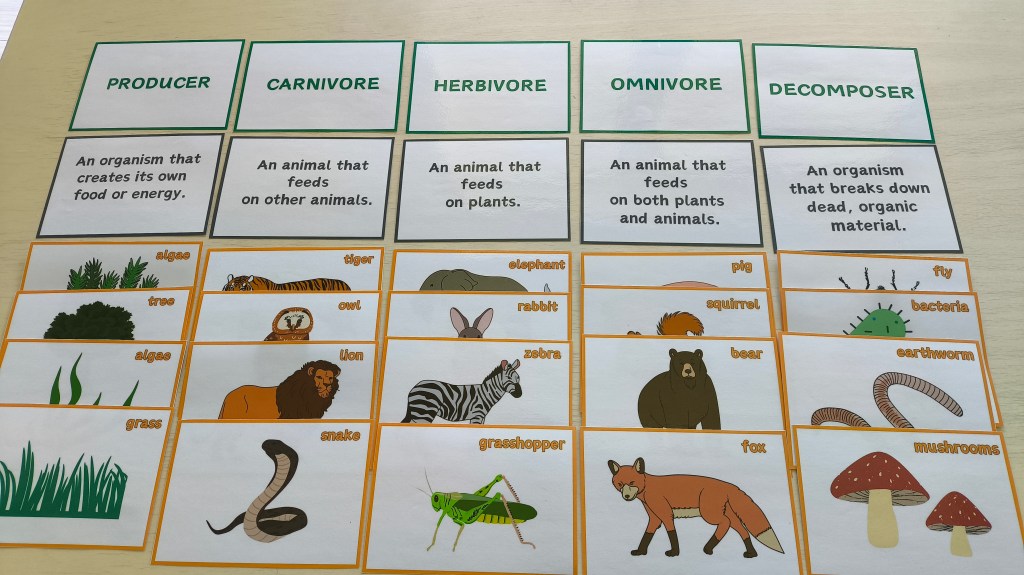
Some of my students’ favorite sorting activities are the ones used to create food chains because they feel a little like solving a puzzle and students enjoy working with the clues. I also find simple sorting activities with names, definitions, and pictures very effective, especially when I turn them into a competition with small rewards. Another activity I like using during revision is states of matter sorting, because this is a topic that can sometimes feel boring for students if revision only involves writing and drawing. Sorting activities make it much more active and engaging.
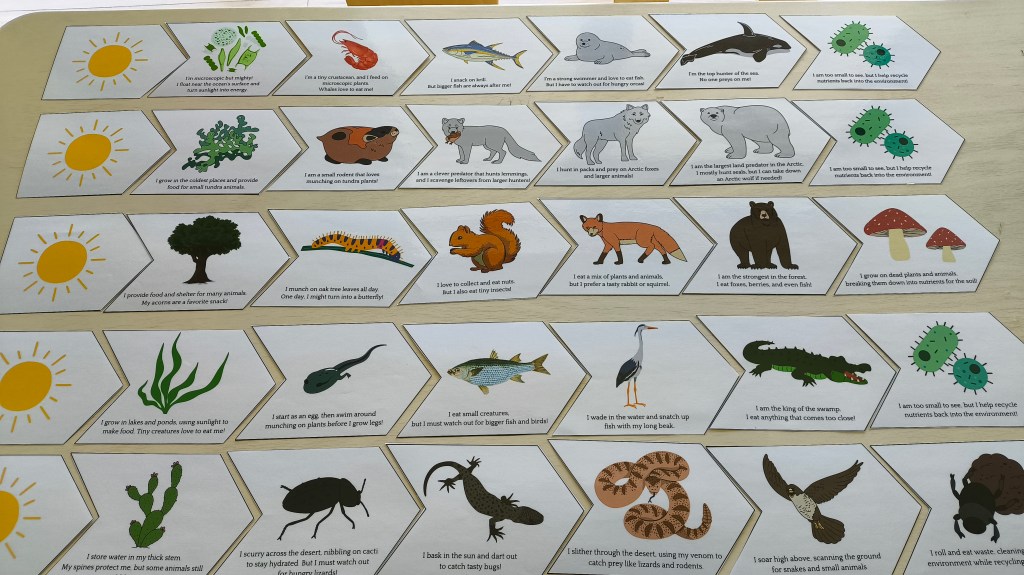
Here you can find sorting activities that I like to use.
Matching Activities for Quick Review
Matching activities are great for fast revision because they only take a few minutes and can be used when students’ energy starts to drop or near the end of the lesson. I often turn matching activities into a small competition and let students work in pairs, which makes them even more motivating and enjoyable.
One of the most effective matching activities I use is for the elements of the periodic table, where students match the name of the element with its symbol. Even though I use this activity several times throughout the school year, it is one I never skip at the end of the year. It is low-prep, simple to use, and very visual, which makes it perfect for quick and effective revision.
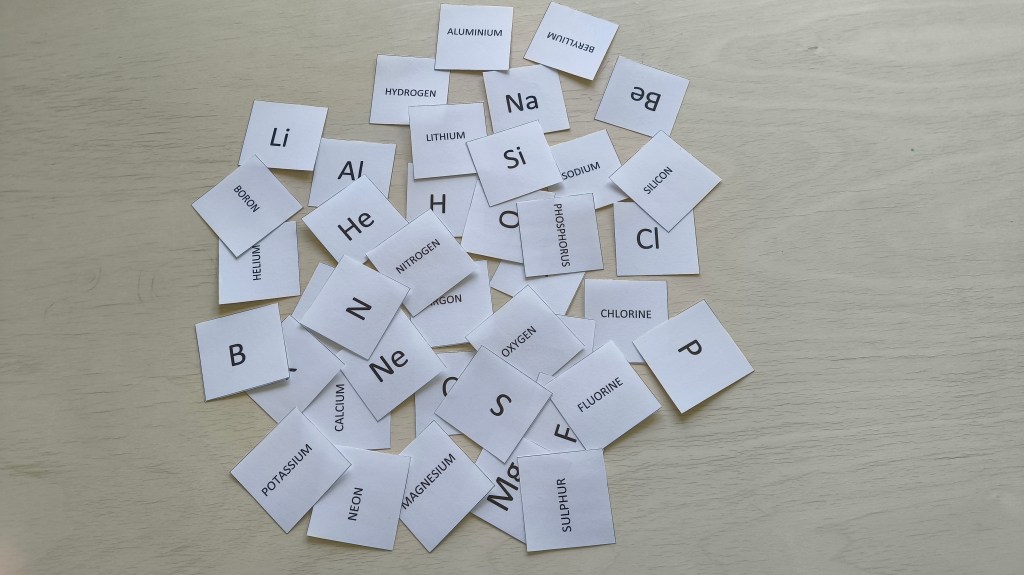
My all time favourite matching activity about elements of the periodic table can be found here.
Using Posters as Revision Tools
I use posters in two different ways during revision. First, I display them around the classroom so students can see them every time they enter. I believe the learning environment matters, and having key science ideas visible in the classroom helps students absorb more over time.
I also print smaller versions of informative posters for students to keep in their notebooks. This gives them a simple visual support they can use while revising in class or at home. Visuals are very important because they help students understand and imagine what they are learning instead of only trying to memorize information by heart.
This approach is especially helpful for students who are more visual learners. When they can connect words with images and organized information, revision becomes clearer and more meaningful.
How I Keep Students Engaged During Revision
Traditional revision methods and individual work are still important to me. I continue to prepare revision questions, PowerPoint presentations, worksheets, exam-style questions, and notes on the board. These all play an important role in helping students review the material and prepare for their final assessments.
At the same time, I know that I cannot expect students to stay fully focused, involved, and motivated all the time just by writing and answering questions. That is why I like to break up traditional revision with more engaging activities that allow students to stand up, move around, cooperate with others, discuss their ideas, and sometimes get support from classmates. Very often, learning from each other can be just as helpful as listening to the teacher.
I use different types of activities at different points during revision. Some are planned in advance, while others are quick activities I use when I notice that energy is dropping and students are becoming tired. Fast matching games, pair work, and group tasks are especially useful in those moments. Group work works well because students can help each other and discuss ideas together. Pair work and competitions are also very effective because students are often more motivated when there is a small reward involved and they put extra effort into being accurate.
Check out sorting activities that can be used in competitions with small rewards.
The end of the school year is not always an easy time for revision. Students are often tired, less focused, and already thinking about summer, so keeping them engaged can be a real challenge. That is why I like to include simple low-prep activities that make revision more active, visual, and enjoyable.
Sorting cards, matching activities, and posters have become some of my favorite revision tools because they help students review important science concepts in a way that feels less repetitive and more interactive. These types of activities also give students the chance to work together, discuss their ideas, and stay involved even when their energy is low.
I’d love to hear your thoughts. How do you keep revision engaging in your science classroom at the end of the school year?
Happy teaching!
Tiana


Leave a Reply