Teaching ecology can be challenging because many of the key terms sound similar and feel abstract to students. When learning about the levels of ecological organization, students often confuse organism, population, community, ecosystem, biome, and biosphere, especially if they are only asked to memorize definitions. Using visual and hands-on activities can make this topic much easier to understand, which is why I enjoy using sorting activities in my science classroom.
Why Students Often Struggle with Ecological Organization
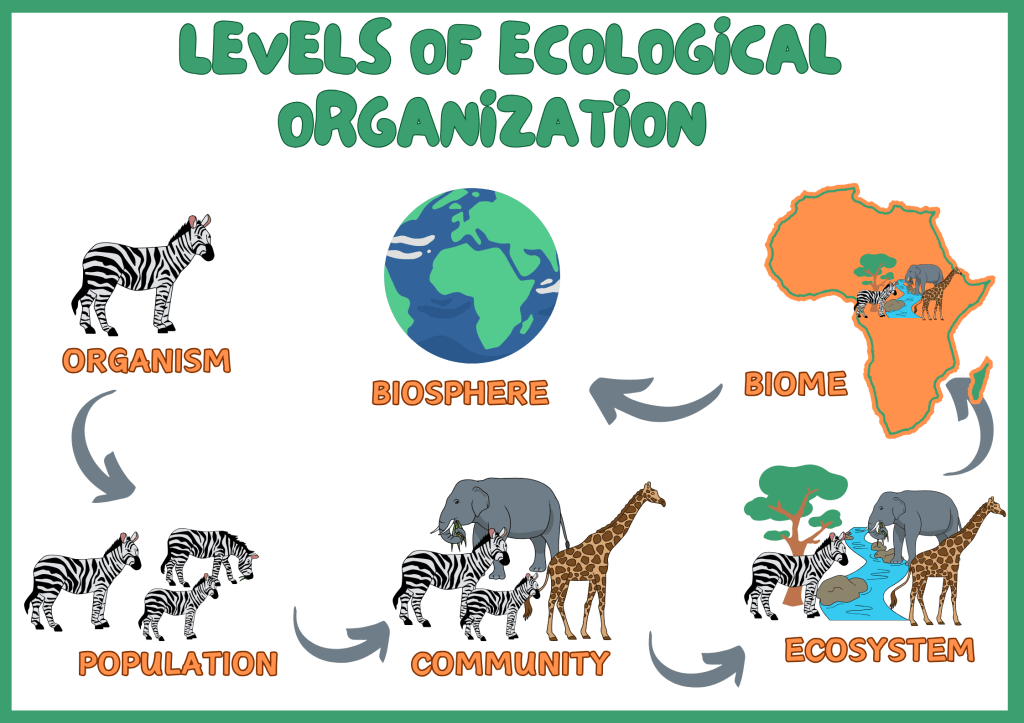
Students often find the levels of ecological organization confusing because many of the terms sound similar and are closely related. A lot of the confusion comes from the difference between ecosystem and biome. Students often ask which one is bigger and why they are not the same, since both include living things and the environment.
Some students also mix up biome and biosphere simply because the words sound so similar. Another common difficulty is understanding the difference between population and community. Students are not always sure when we are talking about just one type of organism living in an area and when we mean several different organisms living together.
Another common problem is that students try to memorize each term separately instead of seeing how all the levels are connected. They need practice comparing the levels, organizing them in sequence, and matching them with real-life examples. Once they can clearly see the progression from organism all the way to biosphere, the concept becomes much easier to understand.
Visuals that might help at the beginning of the unit.
Why Sorting Activities Work So Well
Sorting activities work especially well for topics like ecological organization because they help students make abstract ideas more visual. Images give students something concrete to look at, which makes it easier for them to understand and remember the different levels.
Sorting cards also make students more active in the learning process. Instead of only reading definitions or listening to explanations, they have to think carefully about how to connect key terms, pictures, and descriptions. The support is already there on the cards through the visuals, keywords, and explanations, but students still need to make sense of the information and connect everything correctly.
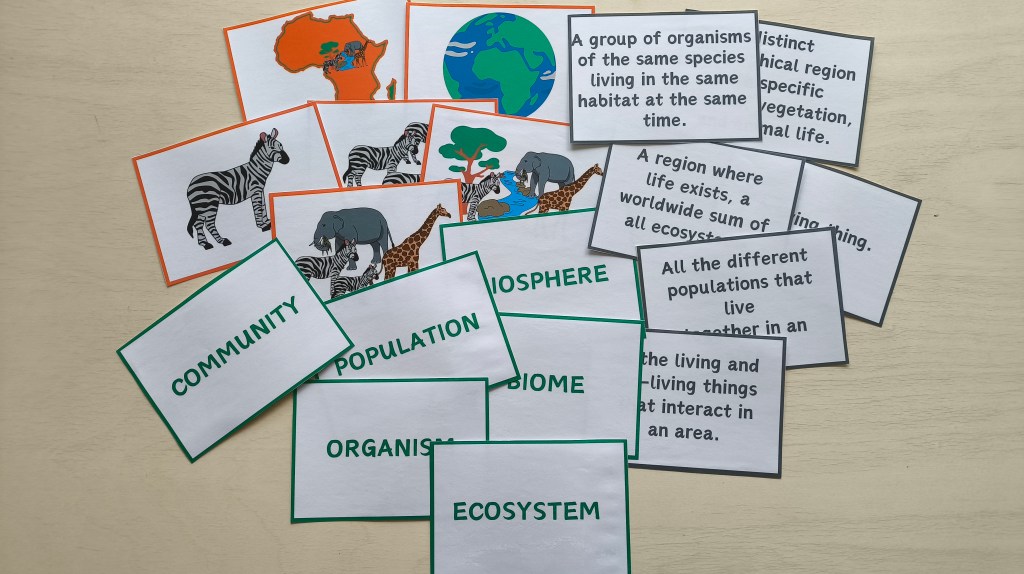
This kind of activity is also very helpful for students who struggle with key vocabulary, content, or even language. It gives them a way to show understanding without relying only on speaking or writing. Even shy students who do not usually want to talk much often enjoy sorting cards because they can participate, think, and succeed in a quieter and more comfortable way.
How I Use This Activity in My Classroom
I use these sorting cards in different ways throughout the unit, depending on what I want to check and how I want students to work.
At the beginning of the unit, I sometimes use the cards if students already have some previous knowledge of the topic. This helps me see how much they actually know before we begin in more detail. It also shows me where the weakest points are, which terms students struggle with most, and what needs extra clarification. At this stage, I usually let students work together in groups because I do not want to create pressure. The goal is not to test them, but to explore their understanding and identify where support is needed.
I also use sorting cards at the end of the unit to check students’ progress. At this point, I usually let students work in pairs, and I often turn the activity into a game or a small competition. The fastest team wins a prize, usually extra points that students can later use for rewards. This makes the activity even more engaging, and even the least active students usually get involved because they enjoy the chance to compete.
Using the activity in these two different ways helps me both assess prior knowledge and review learning at the end of the unit. It also keeps students active, motivated, and involved in the lesson.
A Ready-to-Use Activity for Your Ecology Unit
If you are looking for a ready-to-use activity for teaching the levels of ecological organization, I have created a sorting card resource that helps students connect key terms, definitions, and pictures in a clear and interactive way.
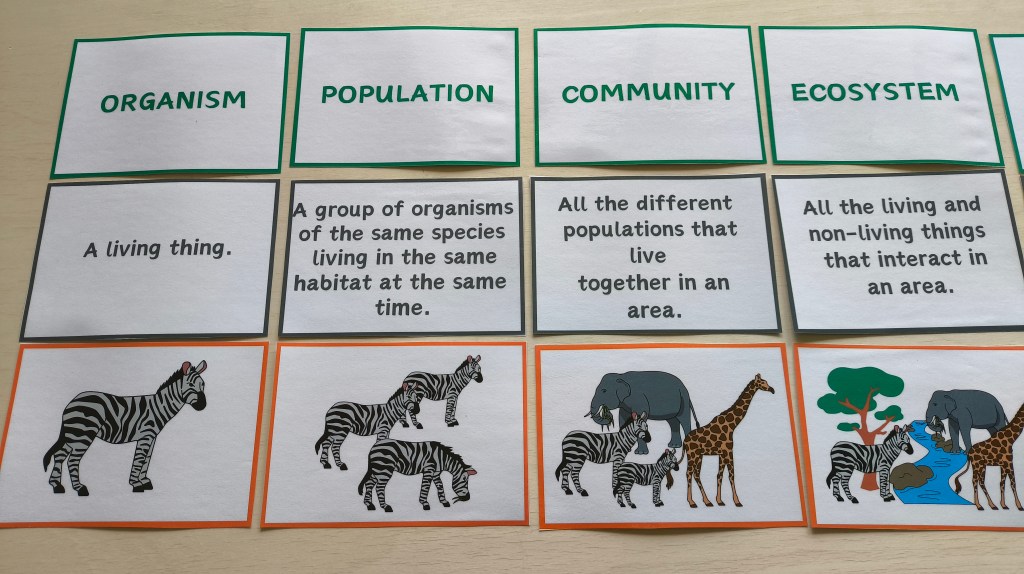
The levels of ecological organization are an important part of ecology, but they can be confusing for students when the terms seem so similar. Using sorting activities is a simple way to make this topic more visual, interactive, and easier to understand.
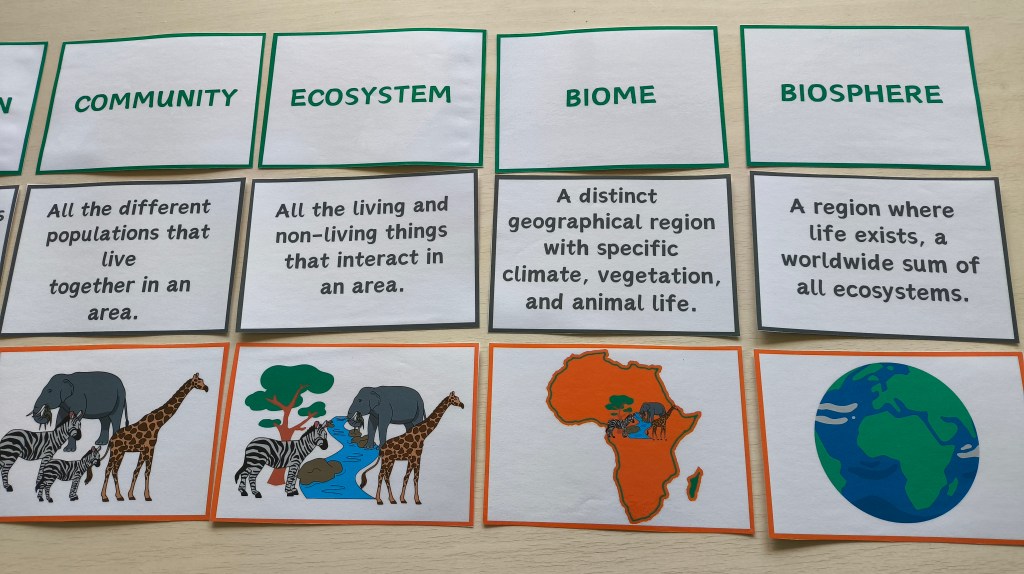
I really enjoy using this type of activity in my classroom because it helps students think more carefully, work together, and show their understanding in a low-pressure way.
I’d love to hear your thoughts. How do you help your students understand the levels of ecological organization in your classroom?
Happy teaching!
Tiana


Leave a Reply